Perspective Drawing - The Horizon and The Eye Level
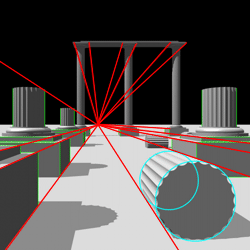
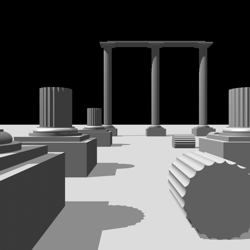
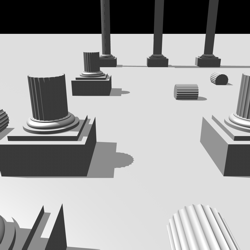
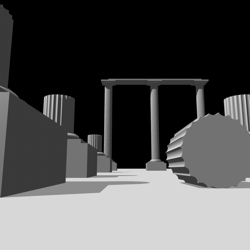
This lesson illustrates the use of the horizon (eye level) as the axis around which a perspective drawing is constructed.
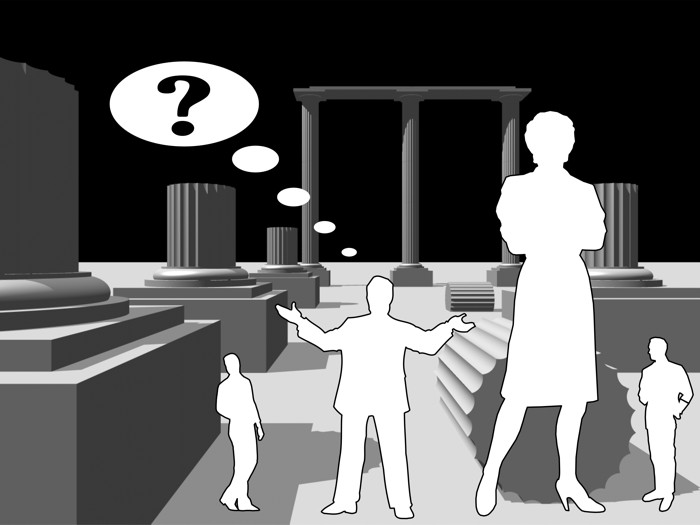
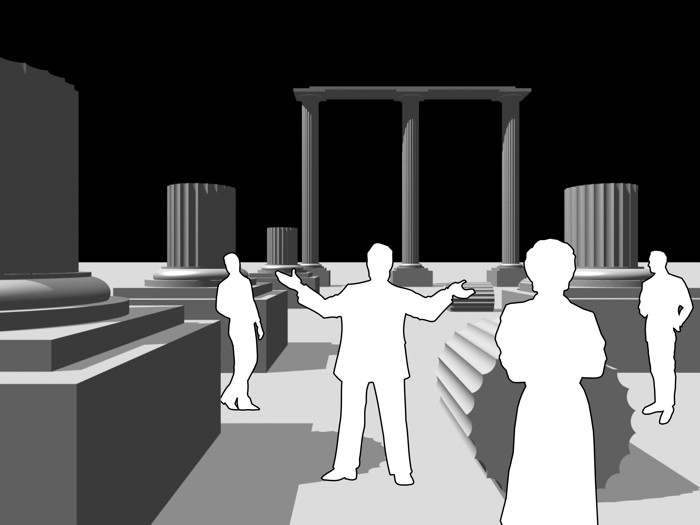

(Click on the flip icon to view)
The Horizon / Eye Level is the axis around which a perspective drawing is constructed.
-
In perspective drawing, the horizon also happens to be the viewer's eye-level.
-
When we are outdoors we use the horizon as a point of reference to judge the scale and distance of objects in relation to us.
-
In art, we tend to use the term 'eye level', rather than 'horizon', as in many pictures the horizon is hidden by walls, buildings, trees, hills etc.
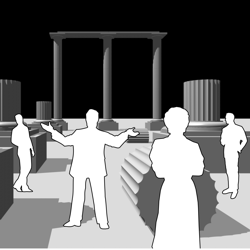
To illustrate the significance of the horizon / eye level in perspective drawing we have added some tourists to our linear and aerial perspective scene.
-
Note how all four figures share the same eye level - i.e. the horizon of the picture. This suggests that they are all the same height and are standing on the same plane. Because the horizon happens to be our eye level, it also suggests that the figures are the same height as any viewer of the picture. As a result, the organization of scale and distance in the drawing makes good visual sense.
-
If you click on the flip icon it should reveal our second image. Although the figures are still the same size, their eye levels no longer have any relationship to the eye level of the picture. As a result, the scale of the figures is totally confused.
-
This demonstrates the importance of the horizon / eye level to the organization of scale and distance in a perspective drawing. It also illustrates the meaning of Leonardo's famous quote that 'Perspective is to painting what the bridle is to the horse, the rudder to a ship'.