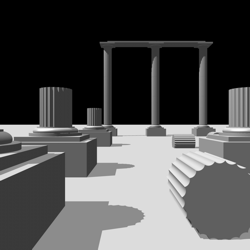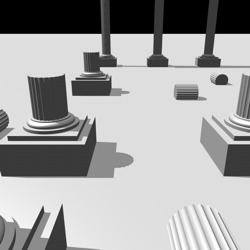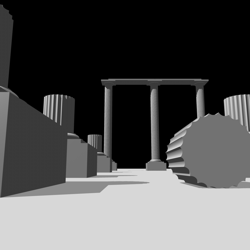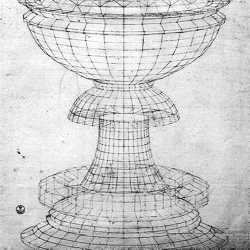
Perspective Drawing - One Point Perspective
One point perspective is the simplest method of perspective drawing which uses a single vanishing point.
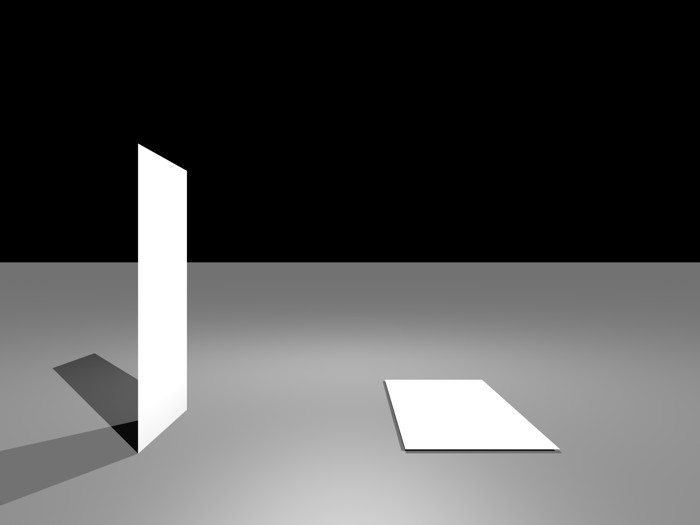

(click on the flip icon to view)
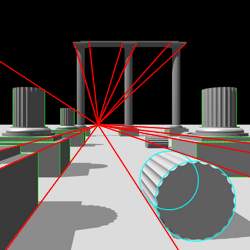
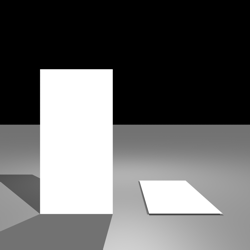
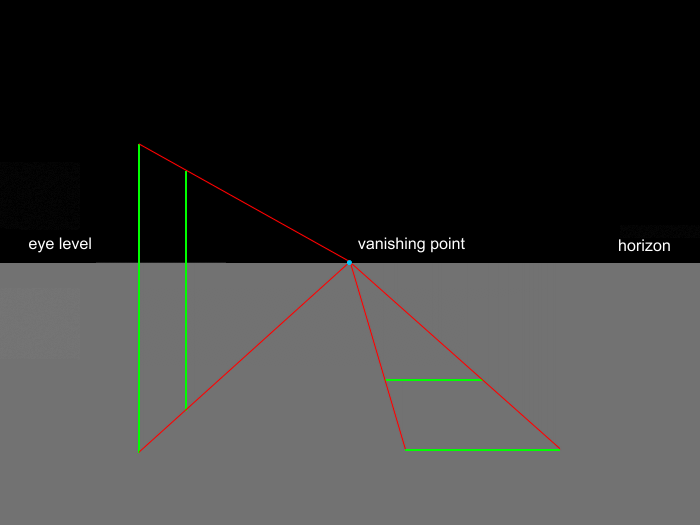
In our One Point Perspective drawing, you can see the lines of construction used to draw the two rectangles from our illustration of the ground plane.
There are two types of construction lines used in this perspective drawing:
-
Orthogonal Lines which we have drawn in RED.
-
Transversal Lines which we have drawn in GREEN.
Orthogonal Lines
-
Orthogonal lines are parallel to the ground plane and move back from the picture plane.
-
Orthogonal lines set the varying heights or widths of a rectangular plane as it recedes from view.
-
Orthogonal lines always appear to meet at a vanishing point on the eye level.
Transversal Lines
-
Transversal lines are always at right angles to the orthogonal lines.
-
Transversal lines are parallel to the picture plane and to one another.
-
Transversal lines establish a fixed height or width between two orthogonal lines.
-
Transversal lines form the nearest and furthest edges of a rectangle as it recedes from view.
Vanishing Points
Vanishing Points, which we have drawn in BLUE, are dots on the eye-level where parallel lines seem to converge and disappear.
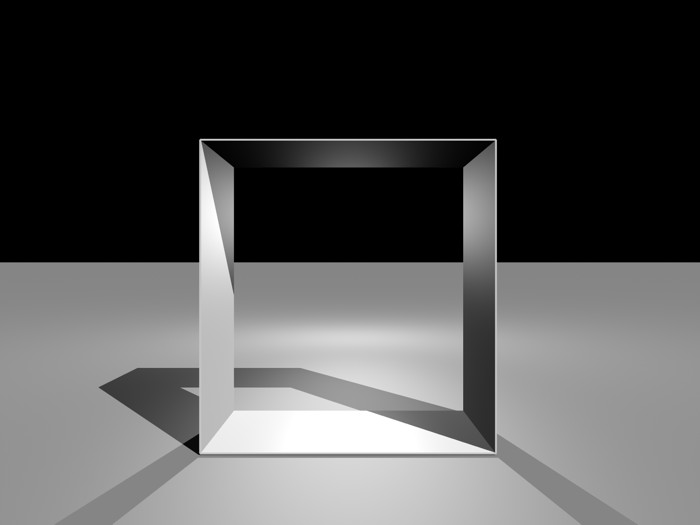
(click on the flip icon to view)
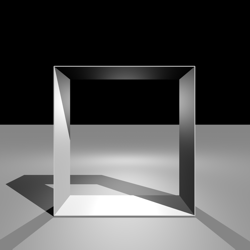
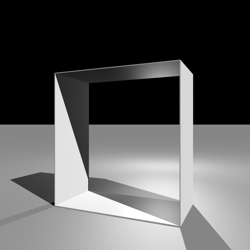
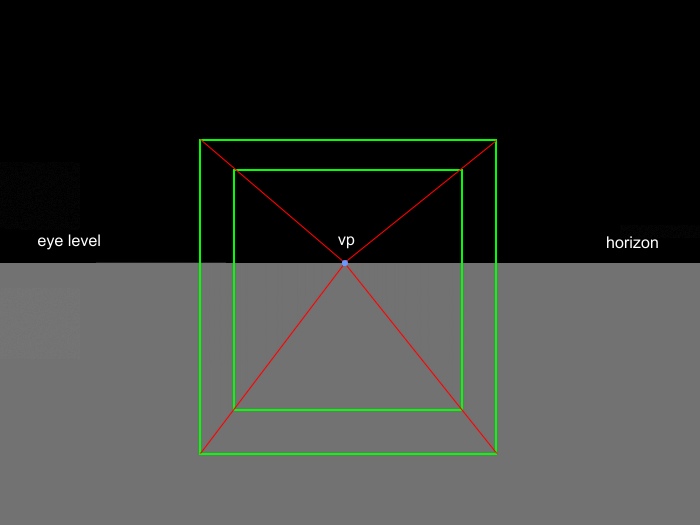
One Point Perspective is so named because it uses a single vanishing point to draw an object. It is the simplest form of perspective drawing and is used here to draw a box.
In one point perspective, the front and back transversal planes of the box always remain parallel to the picture plane. Only their scale changes as they recede into the distance.
NB. It is only the receding orthogonal lines which change their angles.
If you click on the flip icon to view the completed illustration, you will notice that the front and back planes of our box have been left unfilled to make its construction more visible.