Perspective Drawing - Two Point Perspective
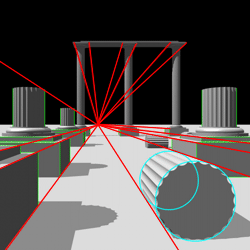
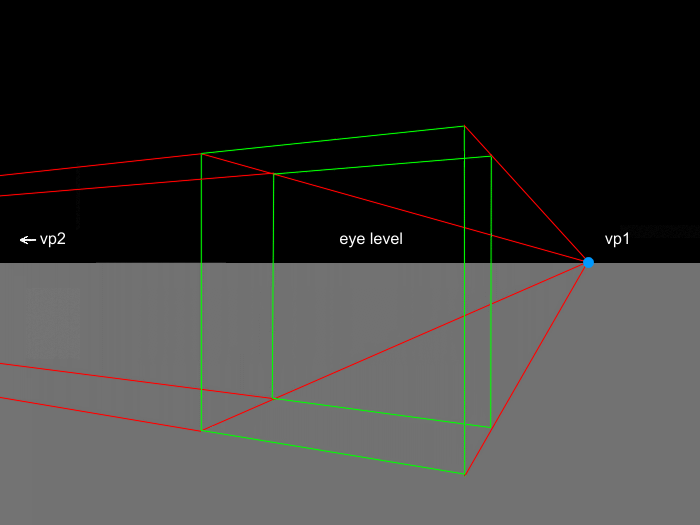
Two point perspective uses two sets of orthogonal lines and two vanishing points to draw an object.

(click on the flip icon to view)
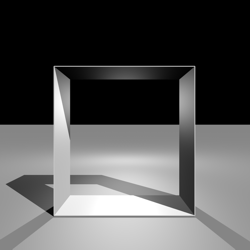
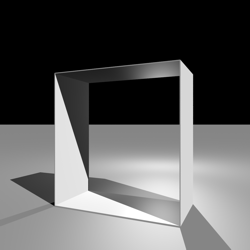
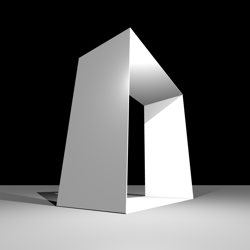
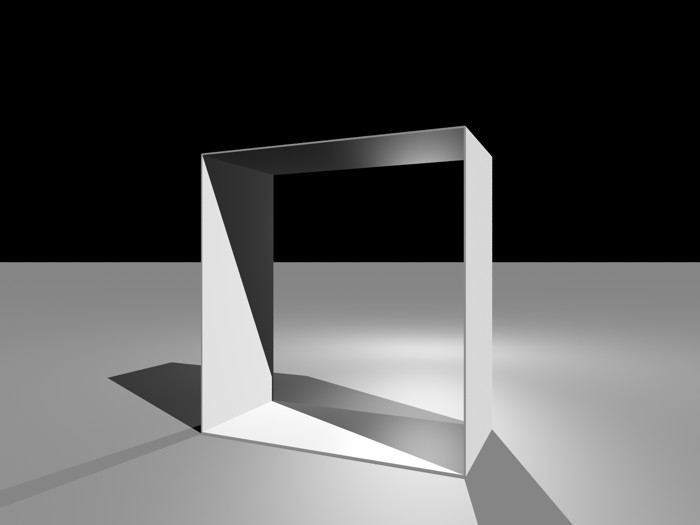
Two Point Perspective is used in this illustration to draw a box which has now been rotated at an angle to the picture plane.
Two point perspective uses two sets of orthogonal lines and two vanishing points to draw each object.
There are no longer any planes parallel to the picture plane. However the vertical transversal lines are still drawn parallel to one another and at right angles to the ground plane.
In the completed illustration, which you can see when you click on the flip icon beneath the image, the front and back planes of our box have been left unfilled to make the construction more visible.
Distant Vanishing Points
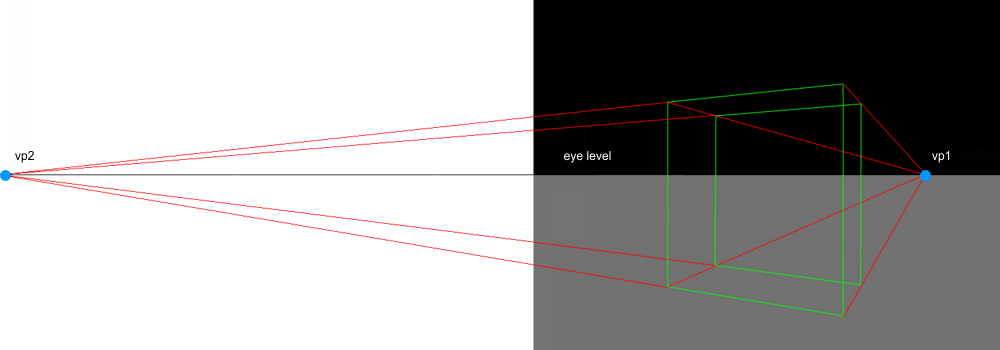
Perspective drawing with two vanishing points can become more awkward because the second vanishing point is often situated well outside the frame of the picture .
If both vanishing points were situated within the picture frame, the angles of objects would appear to be extremely foreshortened.