Color Theory for Art and Design - Color as Emotion
A knowledge of color theory helps us to express our feelings in an artwork. The language of color has even entered our vocabulary to help us describe our emotions. You can be ‘red’ with rage or ‘green’ with envy. We often speak of bright cheerful colors as well as sad or dull ones. A ‘grey’ day may be depressing and result in a feeling of the ‘blues’.
Color as Emotion - Hope and Joy
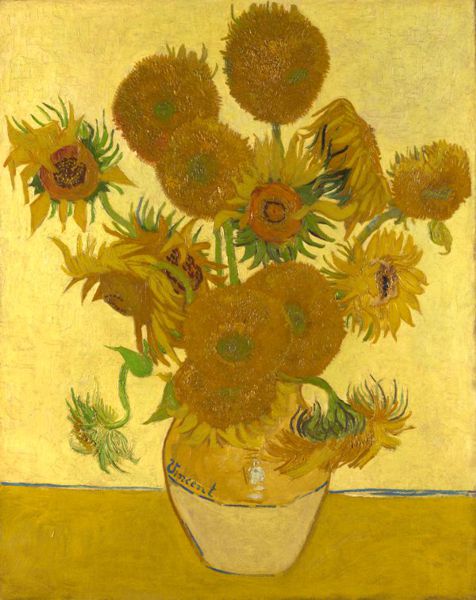
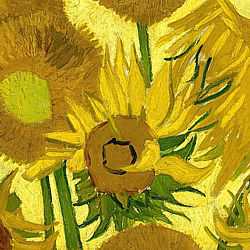
VINCENT VAN GOGH (1853-1890)
'Sunflowers', 1888 (oil on canvas)
The paintings of Vincent Van Gogh show an instinctive understanding of the emotive properties of color. In this version of 'Sunflowers' from the National Gallery in London, he uses warm yellows to create an energetic image that radiates feelings of hope and joy. On the gallery wall this painting is surrounded by a thick dark brown frame and glows like a backlit image from within.
Color as Emotion - Sadness and Despair
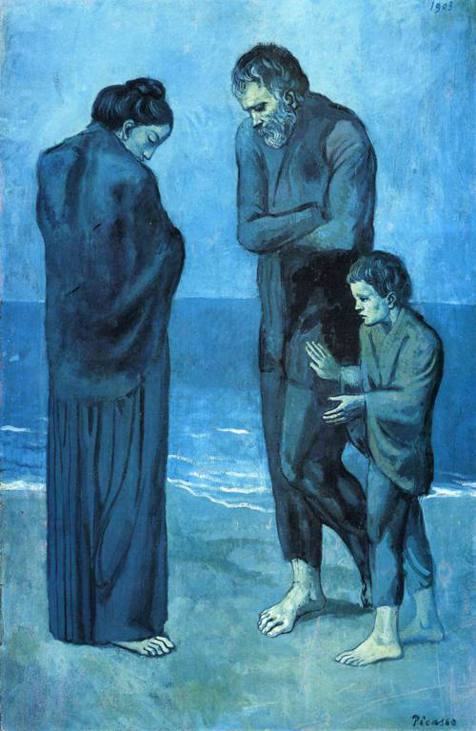
PABLO PICASSO (1881-1873)
'The Tragedy', 1903 (oil on canvas)
Another effective use of emotive color is found in the paintings of Pablo Picasso. Between 1901 and 1904, Picasso painted in monochrome tones of blue which reflected his low psychological state. This was triggered by the death of his friend, the Spanish painter Carlos Casagemas, who shot himself because of his unrequited love for the artists' model Germaine Pichot. This chapter of his work became known as his 'blue period'. In 'The Tragedy' (1903) he uses cool blues to evoke the chill of sadness and despair in a typically gloomy subject from this period.
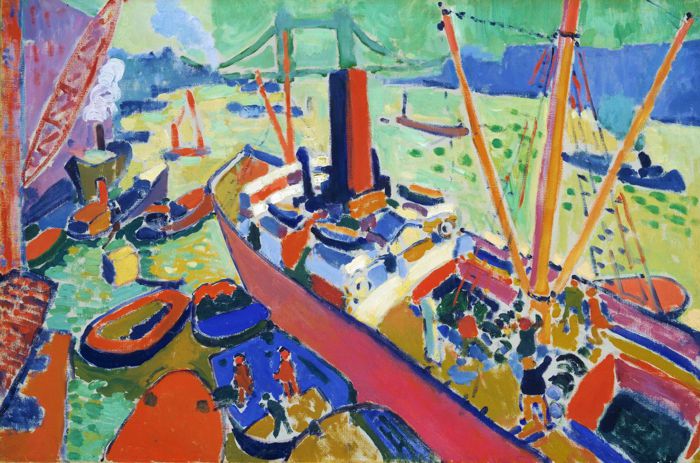
ANDRÉ DERAIN (1880-1954)
'The Pool of London', 1906 (oil on canvas)
André Derain uses the clash between contrasting warm and cool colors to express the noise and activity of this busy dockyard. He creates the illusion of depth in the painting by using warmer colors in the foreground which gradually become cooler towards the background. This organized arrangement of colors in a landscape is called Aerial Perspective.
Derain was one of a group of artists who were nicknamed 'Les Fauves' (the wild beasts). This title was coined by a critic who was outraged by the bold colors in their art. The artistic establishment of the day were offended as they respected control and restraint in the use of color. However, the 'Fauves' believed that color had a direct link to your emotions and they loved to use it at the highest pitch possible. The function of color in their painting was not to describe their subject matter, but to express the artist's feelings about it. Their ideas liberated the use of color for future generations of artists and ultimately gave them the freedom to explore color as a subject in its own right.
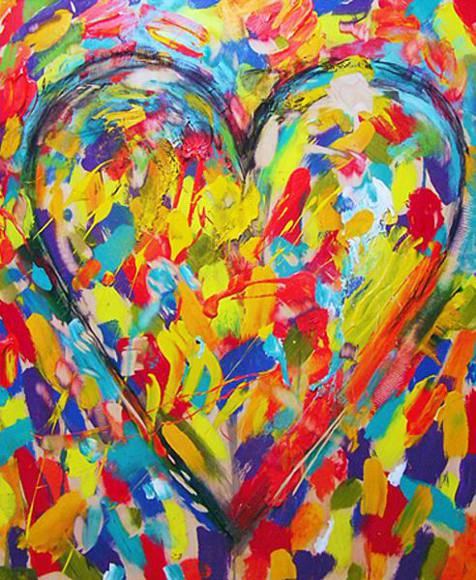
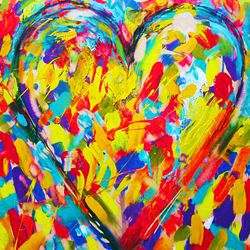
JIM DINE (b.1935)
'The Circus #3', 2007 (acrylic and charcoal on canvas)
Jim Dine is an artist who uses common objects and shapes as templates, in and around which he can explore and develop his ideas about drawing and painting. Although his personal iconography is associated with the Pop Art movement, he is a difficult artist to categorize. His images transcend any narrow description as they retain elements of figuration, Abstraction, Dada and Expressionism.
In 'The Circus #3', he applies vibrant primary colors with expressive brushstrokes in a color chart of emotion both inside and around the symbolic arena of the heart, evoking the excitement of the crowd, the energy of the performers and the fun of the show.