Perspective Drawing - The Picture Plane and The Ground Plane
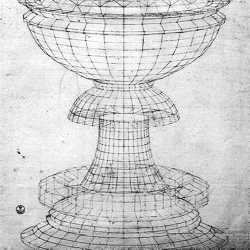
This lesson illustrates the use of the picture plane and the ground plane to suggest the idea of depth a perspective drawing.
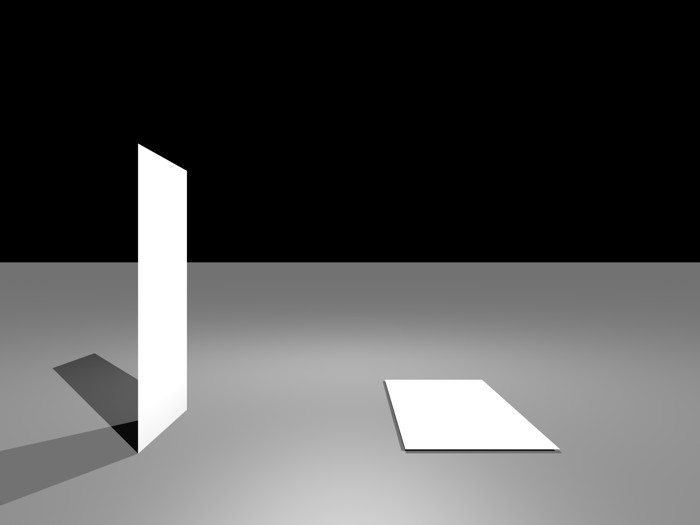
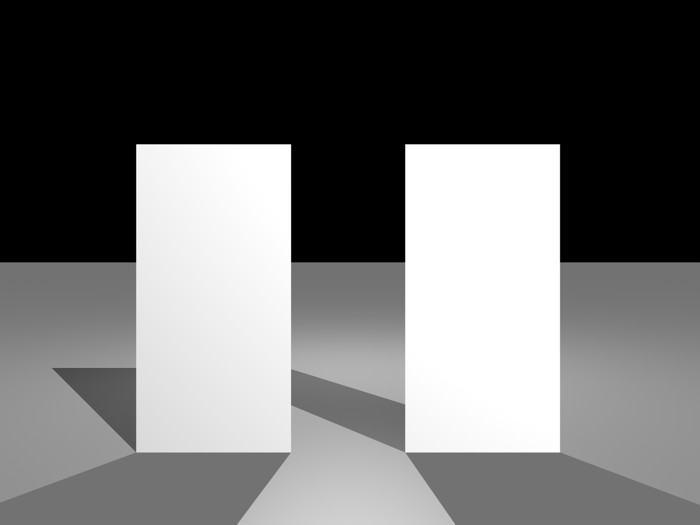

(Click on the flip icon to view)
The Picture Plane is the flat two-dimensional surface on which we draw or project an image in perspective.
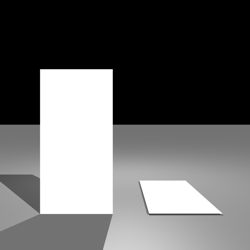
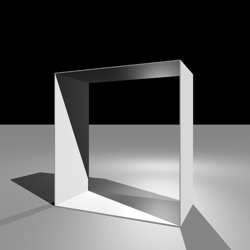
- In our illustration, it is a simple task to draw the two rectangles if they are parallel to the picture plane.
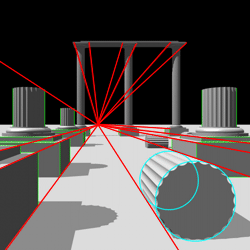
The Ground Plane is at 90 degrees to the picture plane.
-
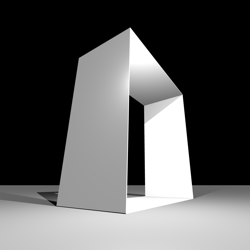
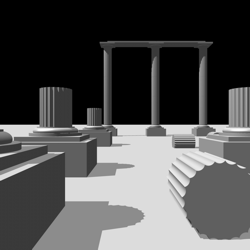
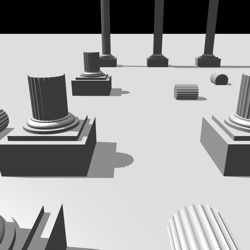
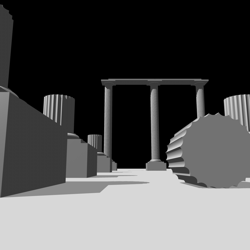
In our illustration, the ground plane is the grey surface on which the shapes appear to be standing. It is emphasized by the shadows which are cast upon it. It starts at the bottom of the picture plane and stretches back to the horizon.
-
The difficulty in drawing our two rectangles arises when you need to illustrate them at an angle to the picture plane. This is where the rules of perspective drawing come into play.
-
Click on the flip icon to see how the perspective of our illustration changes when we switch focus from the picture plane to the ground plane. The rectangles are now seen at an angle of 90 degrees to the picture plane as they recede along the ground plane. This creates an illusion of depth. Their shapes are no longer identical and have changed according to the rules of perspective